
China’s First 60-Ton Mobile Aluminum Billet Homogenizing Furnace Passes Acceptance
On September 23, it was reported that China’s first 60-ton mobile aluminum billet homogenizing furnace—independently developed by Suzhou New Changguang Thermal Energy Technology Co., Ltd.—has completed its R&D phase and successfully passed acceptance testing. This achievement was supported by a key R&D project from Chinalco Asset Operation and Management Co., Ltd. The mobile homogenizing technology employed by the equipment is unique in China and recently won the 2026 Engineering Design Achievement Award from the China Nonferrous Metals Construction Association.
Aluminum alloy materials serve as primary structural components in sectors such as aerospace, rail transport, marine engineering, and new energy vehicles. The growing demand for large-diameter, high-strength alloy billets in aerospace and other fields—combined with the technical constraint that such billets should not be transported while hot—created a need for mobile heat treatment equipment. The project team noted that there was no domestic precedent for developing mobile homogenizing furnaces; consequently, they adapted and integrated structural features from various similar furnace types to create this new system.
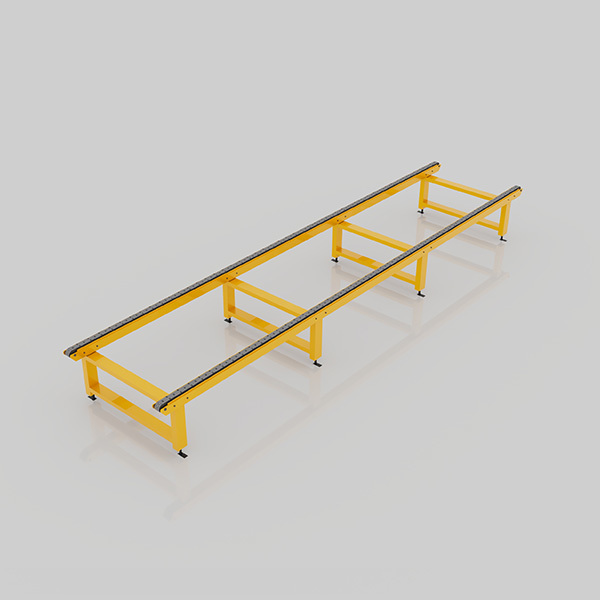
The mobile homogenizing furnace system consists of a homogenizing furnace and a cooling furnace, both of which are mobile. Featuring a rail-mounted, "portal-style" structure, the units can move flexibly between different workstations to sequentially perform homogenization and cooling. Addressing the specific technical challenges of mobile equipment, the team spent two years establishing a comprehensive technical system covering everything from structural design to process control. They overcame key bottlenecks—such as ensuring stable movement for heavy loads, dynamic high-power supply, effective heat retention within the furnace, and uniform temperature control during the cooling of large components. This ensures the system moves steadily and stops precisely under heavy loads, while maintaining efficient heat retention and uniform temperature control during inter-station operations. The equipment is now in stable operation, with all technical indicators meeting the expected targets.